 Skip to content
Climate change adaptation in cities has long been a question with no Special more. You decide everyday about how hot spots are, how resilient ways to stay and how good the future is planned.
The city is no Background
The conversation with Simon Tschannett makes it clear that climate in the city is on the edge of the debate, but in the midst of everyday life. Heat, sealing, lack of shading, and a short, heavy rain events are not abstract scenarios for the future, but planning to reality. The city thus becomes a test of whether we take relationships seriously, or just manage.
What interested me is that The real challenge is not only technical. It is culturally. For a city that wants to respond to climate stress, you must learn a different look — not only in building, but on the relations between space, movement, health, and social justice.
Ö1 has made the theme with Simon Tschannett visible; that is where the relevance for this article is because of climate change adaptation has long been a question of society's capacity to act. Ö1 Lunch Journal opens the frame of this Text thinks more.
Mnemonic: Who wants to build for the future, you must first learn the present stand.
Why climate change adaptation in cities to start, the Problem must
Resilience is often mentioned only then, if something is wrong. In the process, it begins much earlier: if the data are good, clear priorities, honest analysis and planning, which relies not only on the normal case. This is precisely the strength of Urban climatology is: translated warning signals in decisions.
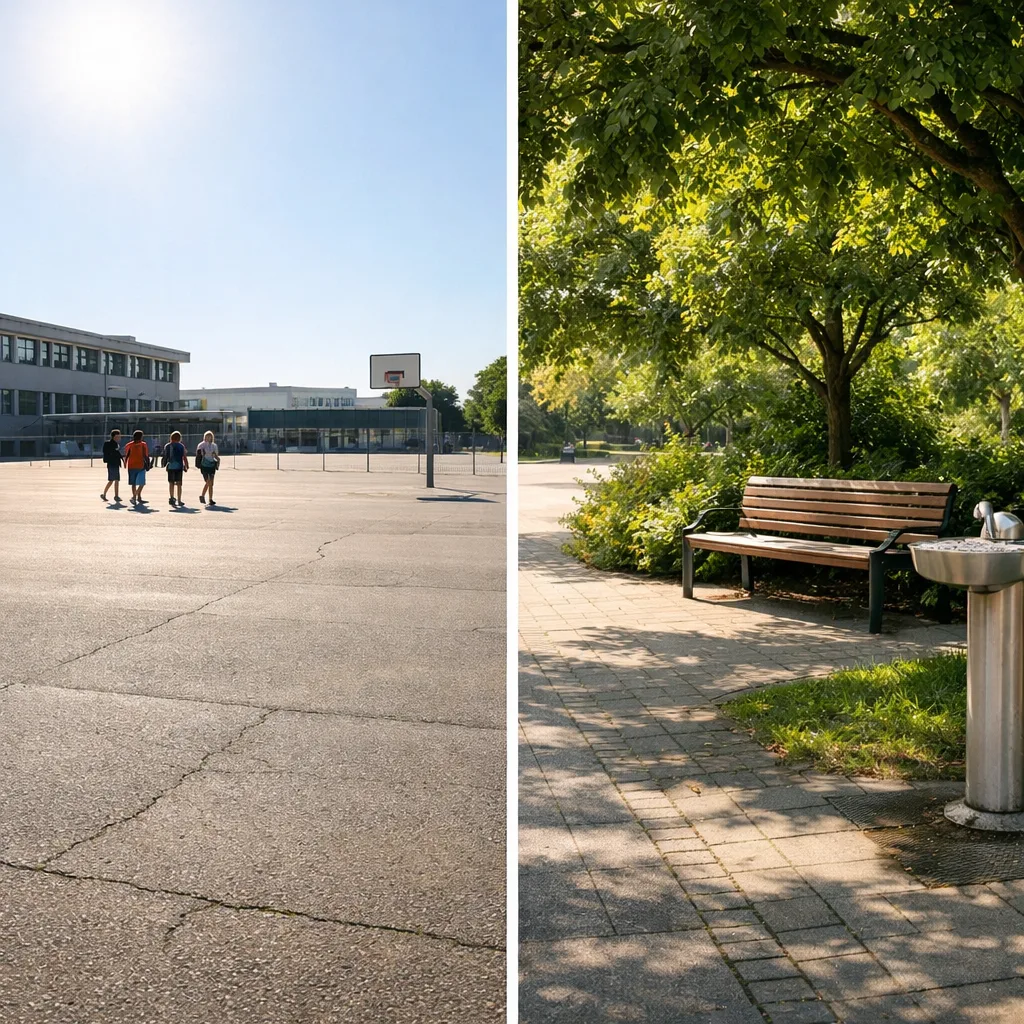
A realistic example, I know from the everyday life of each city: A place looks on the Plan, in the midday heat but like an empty oven. Then trees are not a decoration, but infrastructure. Water surfaces is not a luxury, but a thermal relief. Seating is not a trifle, but to be part of the quality of the stay.
Perhaps the Problem lies not in the fact that we know too little. Maybe it's because we translate Knowledge to be rare in the real priorities. This is also in projects a known pattern: find All of the target well, but no one builds the consequences consistently.
Planning needs a different pace
Urban development is often thought of in short rhythms. Funding logics, Budget, political cycles, press speed, although adaptation may need a long-term effect. This creates a contradiction: We demand of future actions, to plan but it's often up to the next appointment.
Here is a mind frame that I also know from the creative work helps: First, disconnect, then connect. First observe, then rate. Initial scenarios to build, then decide. Exactly in this order robust planning arises. This also includes the views of visions of the future in fits, as I have him How to develop a vision for the future 've described.
Another point is the inner attitude. Who sees the city only as an administrative task, missed their poetic and social Dimension. Who is schematically only novel, missed their conflicts. Good planning is alive in between the two.
What are the methods for climate adaptation in cities
When talking about future, you need methods that not only sound good, but will make decisions easier. In the case of climate change adaptation that are primarily analytical, prioritization, Test and readjust. This is reminiscent of a good project work: not all at once, but effective start.
Three methods are particularly useful:
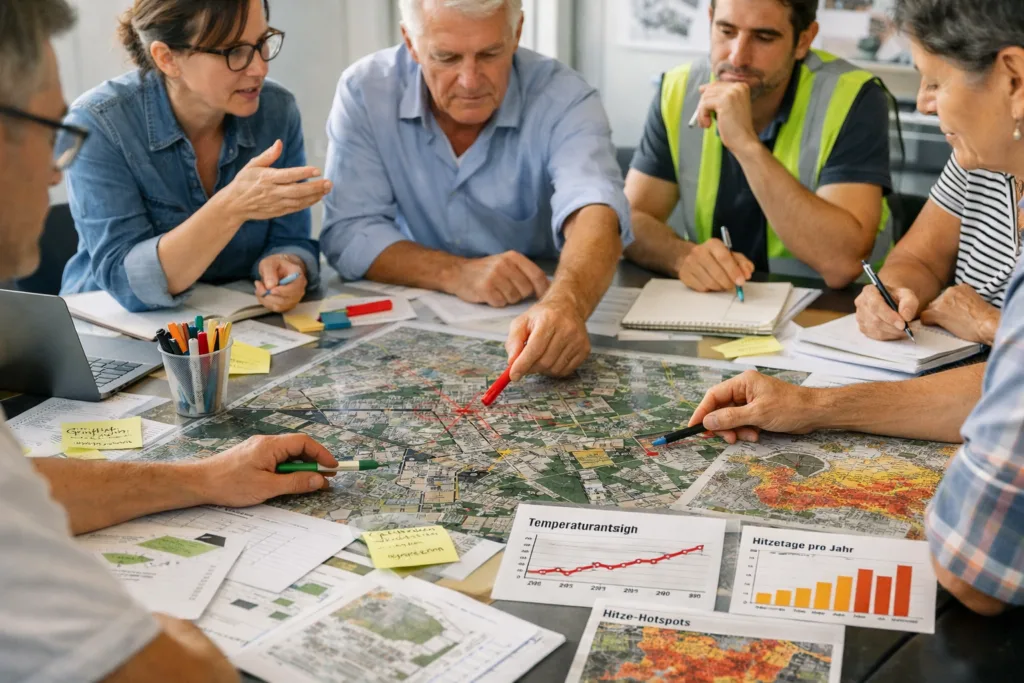
- Analysis of the Pollution hotspots: Where is jammed heat? Where is missing shading? Where tilting paths in everyday life?
- Scenarios work: What happens if more hot days, heavy rain or prolonged dry periods?
- Mix of activities: Not only structurally thinking, but also organizational, social, and communicative.
The bottom line is: resilience occurs rarely due to a single project. It is the result of a network of small, meaningful interventions. This is exactly why inventory analysis, participation and interdisciplinary collaboration are so important. In this sense, my article on fits Building culture – culture store in the constructionbecause it's the same basic idea is visible: The stock is item no rest, but a future memory.
More specifically, it is the views of the current practice examples for climate change adaptation: Urban Climate Change Adaptation shows how cities are already working with heat, water, and quality of stay. And A new impetus to the climate of the future Austrian cities makes visible that this question is theoretical, but the long-eligibility, plan and implement.
What does this mean for school, work, and projects
The city as a subject is not only something for planners:interior. It is also a powerful Learning tool for school, team work and personal development. Because wherever people work together to build something, is to weigh the same logic: Observe, test, improve.
For practice, this means concretely:
- In class, students are able to map:inside your environment: shadow, heat, water, paths, places of stay.
- In the project team can be set prior to any decision three questions: What is the bottleneck? What is the smallest effective measure would be? What can we learn from this?
- In everyday life, you may look: What are the places to relieve me, which places too much for me, and why?
This is also a Form of self-reflection. Not as a retreat but as a more precise Exercise. In my Text Self-reflection practice it is not this small, but effective practice: to leave one's own view of the autopilot.
"The future is not what happens. The future of what we have prepared.“
This set hits the core. It sounds simple, but it is uncomfortable. Because he demands that we take responsibility only then, if everything is visible.
In short
City of climatology shows that the future will be decided not only at conferences, but in streets, stations, School and planning of details. Resilience does not mean everything intercept, but to make wise, before loading in damage tilts. And Confidence comes not from displacement, but with good preparation.
Urban development is always an Exercise in Thinking: What is necessary, what is possible, what is a habit? Who takes these issues seriously, and plans not only more efficient, but more human.
Practice exercise: in The heat - and resilience-Scan
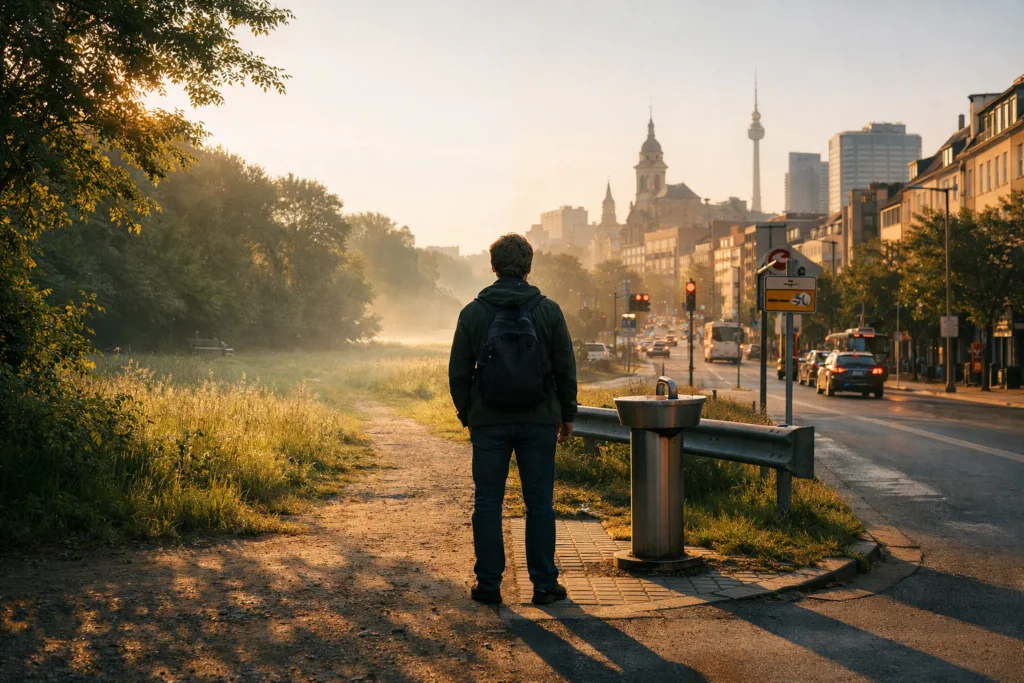
Take 20 minutes and go a way, you well know: to work, to school, to the supermarket, or your district. Write on-the-go three Places where heat, noise, water, shade, or the quality of the stay will be felt. Then these questions will be answered in writing: What helps here? What takes time? What is the smallest effective improvement would be?
This Exercise works alone, in a Team or a class. It is not visible that the development of the city begins in the office, but in attentive Go. And that's exactly the best projects often arise.
Frequently asked questions
What is Urban climatology means simply explained?
Urban climatology explores how cities influence their own climate, and how heat, air movement, sealing, or greening everyday.
Why is resilience in cities so important?
Because cities are particularly affected by heat, heavy rain and drought-and therefore, the loads must be planned.
What can I contribute as an individual at all?
You can carefully observe, participation, demand, local actions in support of and in their own environment smarter decisions support.
How is the development of the city with a future?
Any structural or organizational decision-making acts over the years. Therefore, the development of the city is also a provision for the Future.
Which method helps the most?
The most effective method is usually a combination of analysis, prioritization, and small, well-to-implement steps.
Next Step
If You take the morning only one thing, and then this: Look at your surroundings, not only, but read it. Where is it robust? Where is she vulnerable? And what does this say about the way we treat the future?
A good next step will be a short tour, with notes, alone or with others. After that, the Thinking, the remains are not in the diagnosis will begin. It is practically.
Leave a Reply